|
2/19/2023 4 Comments Compromising with the Clock I'm more than a month into my new full-time job--more on that here—and have settled into a rhythm that both suits and serves me. This weekend has been the first time in that month-plus that I've been able to turn my attention to my current manuscript, which makes it, perhaps, a longer absence than I anticipated. But, hey, career changes are big deals. My focus has been in the right place. The biggest change, aside from the parameters of the job, has been to my sleep schedule. I've spent the preponderance of a career as a swing-shifter—4 or 5 p.m. to midnight or 1 a.m. In my younger days, I embraced the full inversion of that schedule. I'd come home, make dinner, fire up the TV, talk on the phone, whatever, then go to bed around 5 a.m. or 6 a.m. Wake up after noon, eat breakfast, head off to work. Lather, rinse, repeat. Later on, I realized how much of the day was getting away from me that way and adjusted. Home, directly to bed, wake up at 7 a.m. or so, have hours and hours to my own devices before I headed to work. I wrote a lot of novels that way. Back in January, my thinking was along these lines: I'll wake up at 5:45 a.m., write, eat breakfast, then start my workday. 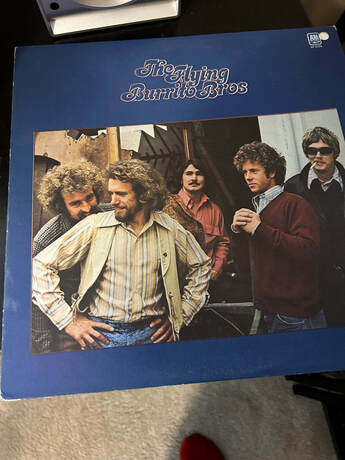 It hasn't worked out that way. Oh, I'm waking up early. And I'm answering email, paying bills, doing whatever can be done when much of the world is asleep, then reporting to duty in my sweet home office. (Seriously, my office is the BEST. I'm sitting here at the short end of the L-shaped desk, writing this as a warmup to today's work on the manuscript, and listening to the Flying Burrito Brothers on vinyl. You tell me how life could possibly be better. I dare you.) When I get off work in the early evening, I'm too fried to write. I eat, I visit my dad, I tend to small errands, then I trudge upstairs for another go-round with Mr. Sandman. Can't write in the morning, so what to do? Easy. Write on weekends. I have no absence of motivation to do so, and no absence of weekends to put those writing hours into. Point is, I can write a lot of novels this way, too. 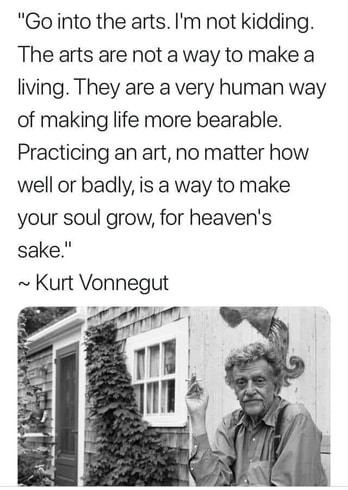 The whole thing puts me in mind of a meme I shared on Facebook this past week, one that got a lot of traction with my artist-heavy social group. And it's something, perhaps, I don't focus on enough when I'm putting my hopes on this book or that book to connect widely and to ratchet down the financial pressures of daily American life.
I don't do it for money. And I say that in a non-starry-eyed way, and in a way that's not too idealistic for my own good. The point is that being compelled toward the arts comes from a deeper place, a deeper need to make sense of the world and to contribute something to it that doesn't traffic in cynicism and power. Do I wish I had a better nose for generating straight cash, or that maybe I'd made different decisions along the way that would have augured more to the benefit of my bottom line? Sure. Absolutely I do. But I'm not dead yet. There's still time. Once I started getting comfortable with the multiplicity of ways I can define myself, it released me to embrace my multitudes. I can be an analyst and a content specialist. I can be a friend and a husband. I can be a brother and a son and an uncle. And, damn right, I can be an artist on my terms, in my time, trying to make a contribution from my cozy little office with a turntable and a drink fridge. I not only can but also am gonna. Just watch me.
4 Comments
11/8/2022 0 Comments Books for Our* Kids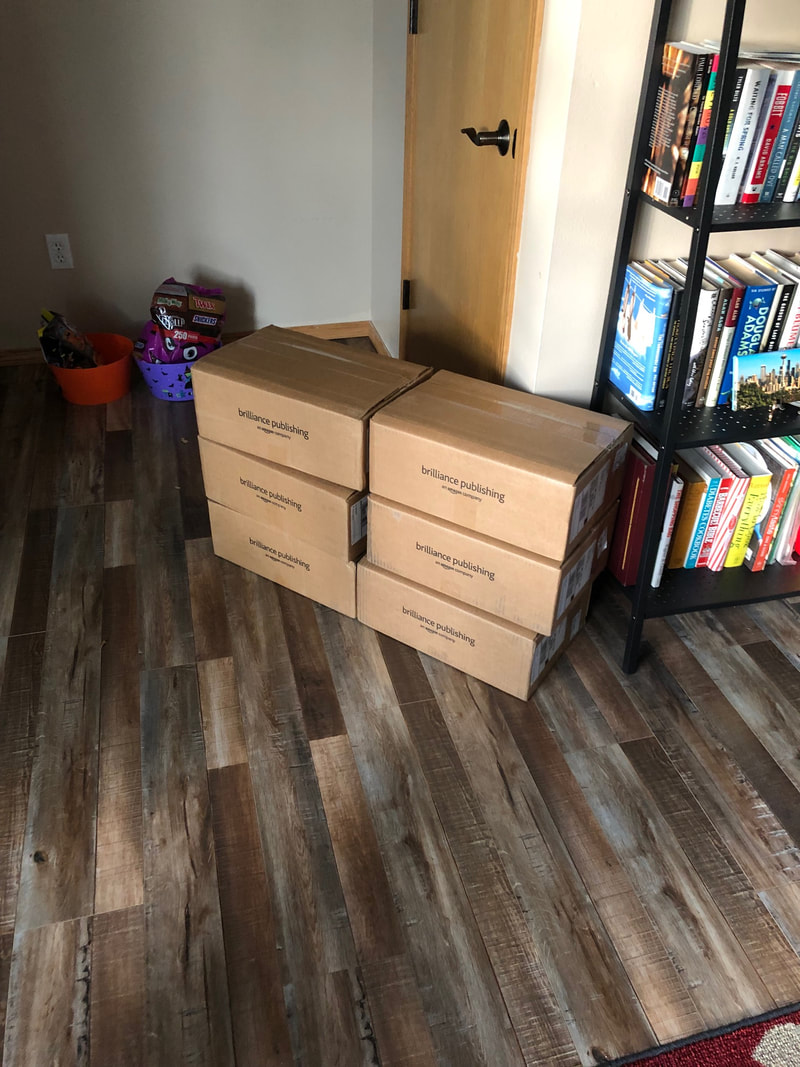 The books, on the floor of our living room, before they were sorted and delivered. It's Tuesday, November 8, the first snow day of the season in Billings. Ordinarily, I'd have stayed in, but today I went out, and I'm glad I did. I delivered 40 fresh new copies of my debut novel, 600 Hours of Edward, to Skyview High School in Billings. That was the last of four deliveries I've made to Billings schools, for a total of 150 books. And the beauty of this is that I am merely the messenger, the delivery driver. These books—to replenish previous (and tattered) copies of the novel that have been in the schools for around a decade—landed where they did because of a community that answered the call. I asked for donations, enough to purchase those 150 books at a steep discount from the publisher, and my community funded the campaign inside of 12 hours. And when I say community, I mean Billings—so many people in Billings—but I also mean the larger community I'm privileged to call my own. Teachers in Virginia kicked in donations. A coworker in Ohio ponied up. Friends in Texas. People I didn't know until some cash landed. They did this because I asked for help in putting books in kids' hands. In this strange time in America, when we hear so much about taking books away from kids, these generous donors put books in front of them. It's a beautiful, radical act. 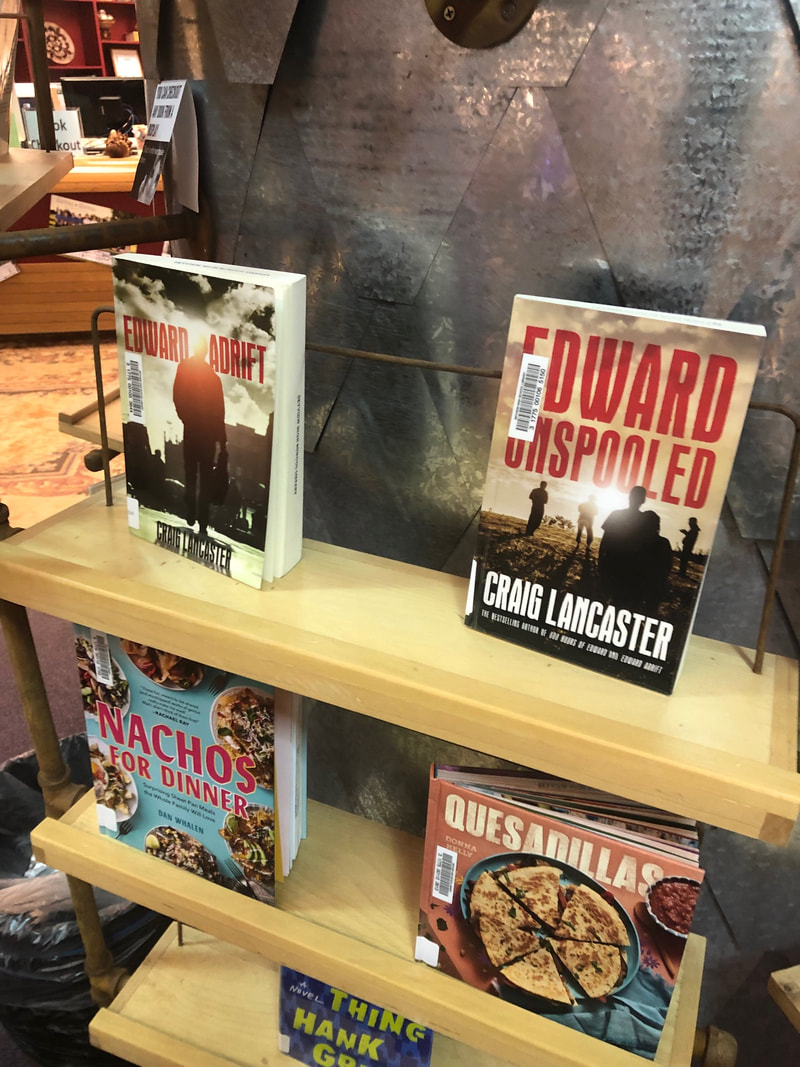 Two of my other novels, on display at Skyview High School in Billings. Right above the nachos and quesadillas, where they belong. As I so often do when the subject turns to the ties that bind us, I give thanks to teachers for doing what they do even as a significant slice of the population wants to fight them, deny them what they do well, castigate and smear them. This is shameful, yes, but it's also not new, and we can either let these angry, outsized voices have the floor, or we can meet them with a different set of values. English teachers where I live were instrumental in getting 600 Hours on the approved curriculum reading list for the high school level here in Billings. They saw a contemporary story of a neurodivergent character, one set in the town where their kids live, and they did the heavy lifting to ensure that they could teach that book in their classrooms. As I said in the Billings Gazette article about the first book delivery—thank you, Gazette—those teachers' dedication puts a responsibility on me that I'm only too happy to carry. “They’re the ones who pushed for this book because they know how to reach these kids. And if they’re the ones who are making sure of that, I’ll be the one making sure they have the books.” Damn right. 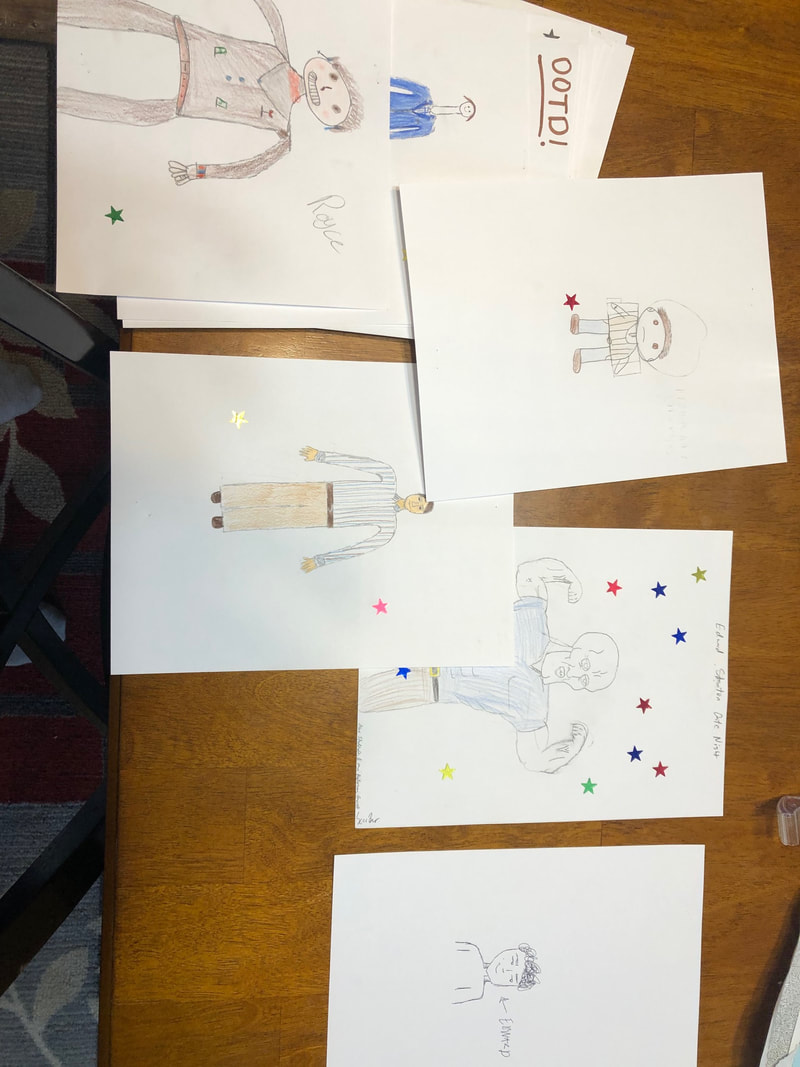 At Billings Senior High School, kids presented me with drawings they made imagining the main character in 600 Hours of Edward. How wonderful. A word about the asterisk up above.
Yeah, they're our kids. I sometimes get a lot of pushback on this—"they're not my kids"—and I really wish someone taking the opposite view would spend just a little bit of time thinking expansively about the idea and the implications of abandoning it. My trip through public education was, in many ways, a disaster. It was also one of the most important factors shaping who I became and how I see the world. Certainly, public education is not perfect, and certainly, reasonable people can disagree on how to shape it, fix it, whatever. But we cannot, must not lose our responsibilities to ourselves and each other and the generations coming up behind us. Public education is a compact, an agreement that we will provide our kids with a basic education, as a community, knowing full well that our investments in those kids now are really an investment in our own future as a society. If we lose that, I'm afraid we lose everything else. So, today, I finished delivering some books. Backed by my community. Hopeful that the fight can be won. Determined to keep fighting, either way. 11/2/2022 0 Comments Launching ALL OF YOU
Now that the video is up at YouTube, I'd be grateful if you checked out this interview I did with my wife, Elisa Lorello, to mark the release of her new novel, All of You. I've been hoping for many, many years that I'd have a chance to get to know her better, so lucky me!
We get into a lot of stuff in a wide-ranging conversation (we really don't have any other kind). I'm just so proud of her and of this book, which is getting some rave reviews.
Want a signed copy? You can get it at our favorite bookstore, This House of Books in Billings, Montana. Just note in the comment box that you want it signed, and Elisa will oblige you. 10/12/2022 0 Comments The Past's PresenceEven though it's been a lively few weeks, Elisa and I have been feeling the pull of something peaceful. We scuttled our anniversary plans at the beginning of the month because Spatz the Cat was ailing, then a calendar filled with wonderful things—the High Plains Book Awards for me, a new novel launch for her—conspired against just-the-two-of-us time. Today, we grabbed a little of that, heading off on a day trip to one of our favorite places anywhere, Chief Plenty Coups State Park. There, less than an hour's drive from Billings, is a place both sacred and accessible to all, a preservation of the great chief's words and artifacts and vision. Every time we go, we take a lunch, then we visit the museum, then we take the long, looping walk around his home and his orchard, basking in the quiet and the peacefulness. A visit truly is a salve. 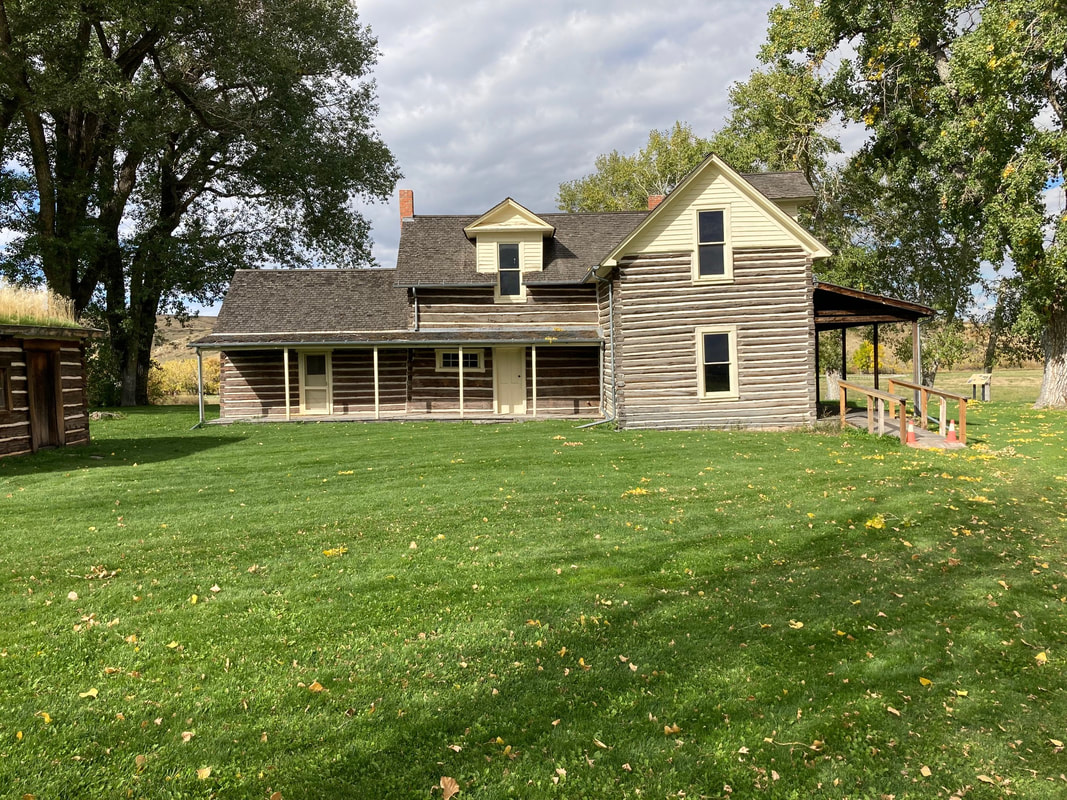 The house of Chief Plenty Coups (1848-1932). 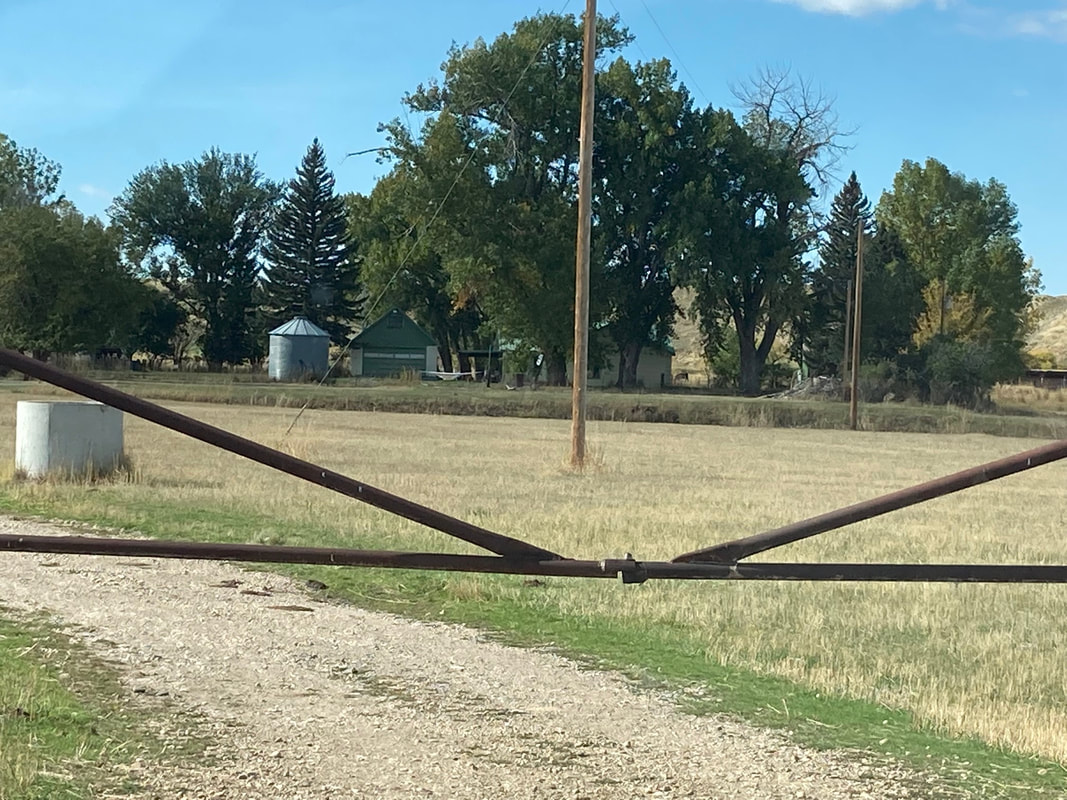 The long-ago Hamilton place. On the drive back home to Billings, just outside the town of Pryor, I stopped for one more picture. You can't see much; the gate at the property was closed and locked, and my little iPhone camera couldn't do much with the scene.
Out there, though, is a house that once belonged to a rancher named Herman Hamilton, who is long dead and even longer not the owner of the spread. And somewhere on that patch of land where the house sits once sat a tiny little trailer home, way back in the early 1960s. It was there that my mother and father lived for a short while as Dad helped Herman tend to his ranch. The time that they lived there far predates me. They've been divorced for nearly 50 years—almost the entirety of my life—and probably haven't been in each other's presence more than a dozen times in all those years. When I'm with them in the same room, it's less a case of the gang is back together and more a case of my looking at them and wondering, "How the hell did this pairing ever happen?" (Answer: Youth and beauty and mutual desire. Move on, Craig.) Anyway, this isn't about that, not so very much. It's not even about this place that sits mere miles from somewhere Elisa and I regularly go. No, this is about the adage that gets fixed to Montana sometimes when it's described as one small town with really long streets. Herman Hamilton, you see, not only was my dad's long-ago employer but also was my best friend Bob's great uncle. Bob, whom I've known only since 2013 or so. Bob, who became friends with my dad because they both owned condominiums in the same development and were chatting one day and Dad mentions Herman Hamilton and Bob says, "Holy crap ..." The world really does shrink sometimes. (Herman was also a bank robber of some repute in the 1930s, but I suppose that's another story for another time.) So, before I go off on a burst of happiness, I should do this: In the interest of consistency and intellectual rigor, I must adhere to my basic sense that happiness, as an emotional state of being, is highly overrated. It's too reliant on current circumstance to be trustworthy, and the factors that spur it—good news, fortuitous coincidences, pure serendipity, and the like—are too transient to be relied upon. My aim in saying this isn't to knock happiness—if you have it, brother or sister, be thankful for it and keep it as long as you're able—so much as it is to cast a vote for its more durable cousin, fulfillment. If you're fulfilled in where you are, whom you're with, what you're doing, where you're headed, you have something to hold tight to when the transience of happiness is with you and when it's against you. That's my theory, anyway. That said, I'm pretty (burbly-happy curse word) happy these days. Let me count the reasons ... 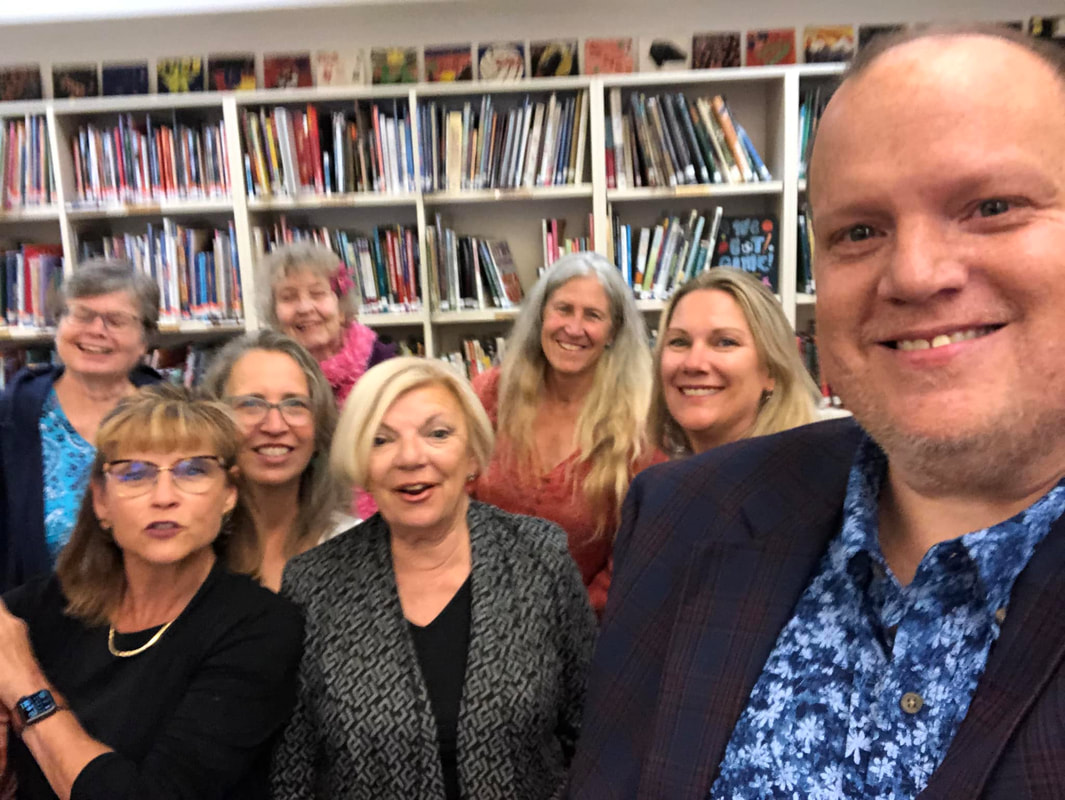 With readers of AND IT WILL BE A BEAUTIFUL LIFE at the Big Sky Community Library. 1. One night in Big SkyI'm just back from Big Sky, about three hours from where I live. The board of the Big Sky Community Library chose And It Will Be a Beautiful Life as the community read (One Book Big Sky) for the fall. Tuesday night was sort of the capstone of the event. I drove out, had a wonderful chat with folks who read the book, spent the night, and came home. It was a soul restorer in all the best ways. When writers and writers gather, it can be a lovely thing (see below), but it can also be a release of the pent-up frustration that only writers know and thus are in position to help each other through. When readers and writers gather, it's straight-up love. How lucky was I to spend an evening with a bunch of people who read my book, read it closely, had such interesting things to say about it, and wanted to come talk with me? The luckiest. No doubt about it. I rode those good feelings all the way home. The drive from Big Sky to Bozeman is one of the most visually arresting things you can see anywhere in these United States, so there's that, and believe me, I drank it in (figuratively). I made stops at libraries in Bozeman, Livingston, Big Timber, and Columbus, planting seeds for more days and nights like the one I'd just enjoyed. Here's hoping. 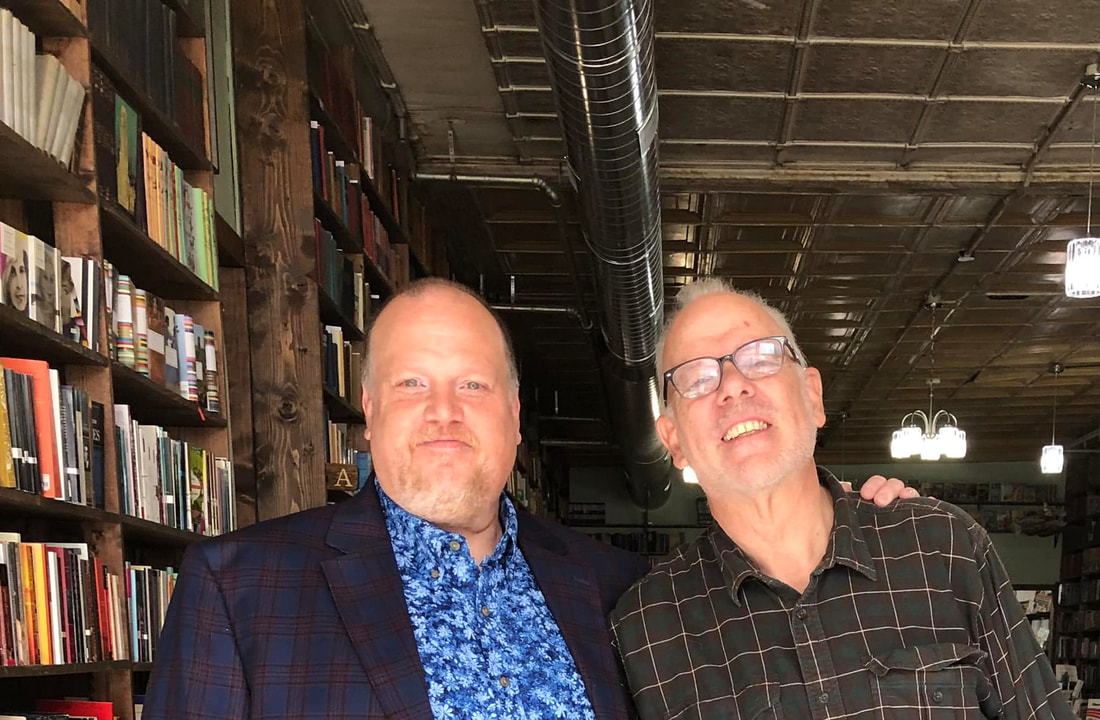 With David McCumber—editor extraordinaire, author, raconteur of note—in Butte. Now that I see this picture and the one above, taken weeks apart, I see the trouble: Yer boy needs a new shirt and jacket. 2. The blessings of good friends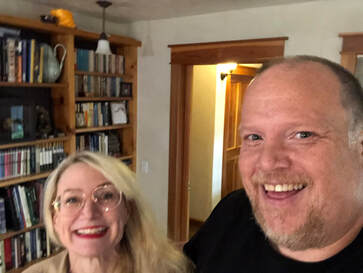 With AMERICAN ZION author Betsy Gaines Quammen. With AMERICAN ZION author Betsy Gaines Quammen. I think I'm only just now getting my considerable arms around how emotionally bereft the pandemic has left me (and so many other people, judging from what I'm reading and what I'm hearing). Honestly, I thought being chased inside and away from gatherings was a small blessing amid a horrible event, but it wasn't that at all. Now that I can see and meet the people I want to see and meet—while still being careful, of course—I'm realizing how much I craved it. Just in these past few weeks, I've gotten to hang in Butte, Missoula (thank you, Gwen Florio and Malcolm Brooks), Livingston (thank you, Amy Zanoni and Maggie Anderson), Bozeman (thank you, Betsy Gaines Quammen and Kryssa Marie Bowman), and Big Sky. I've had the fellowship of brilliant writers and thinkers, genuinely good people, and people who lovingly tend to the cultural life writ large. Man. I've needed that so much. So much. Happy? Yeah, I'm happy. But grateful most of all. 3. The work is going well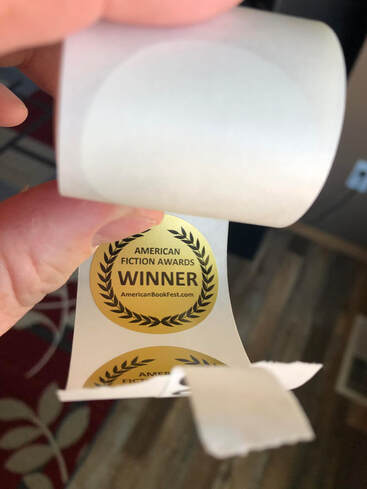 Winning an American Fiction Award was a lovely bit of news to receive. Winning an American Fiction Award was a lovely bit of news to receive. OK, look, here's where I keep it honest: If my publisher had said, sorry, kid, but your manuscript stinks and I'd received a lot of hate mail and my dog was snubbing me, would I be Mr. Happy? I would not. This, of course, underscores my point about fulfillment vs. happiness. I work to a standard I set so I can know I've done my best regardless of what a gatekeeper says (or, at least, so I'll have the gumption to try again if I find the door closed). I try to approach the world with an open heart because I believe that's how we get past at least some of our divisions. I engage with my dog so he knows I'm his, and he's mine. That's fulfillment. The happiness of it comes and goes. But I can't deny that I'm really, really enjoying every side of the work right now: The creation of it, when it's just me and an idea and the challenge of getting from here to there. The production of it, where I interact with the publisher I wanted to be with and who wants my work on his list. The carrying it to readers and interacting with them, which can be such an incredible validation of the work put in. The awards, both realized and potential (talk about transience). I'm as energized for all of it, the whole arc, as I've ever been. In Missoula, while waiting to eat lunch, I happened upon a meeting with a well-regarded poet and fiction writer and a genuinely good human. I don't know him well, but I like him, and even so, in the worst of my do-I-want-this-anymore crisis a few years ago, I deleted him (and a whole lot of other writers) from my social contacts, in a clumsy, flailing attempt at ridding myself of reminders of an endeavor I wasn't sure I wanted anymore. So there I was in Missoula, nonexistent hat in hand, apologizing for something I'm sure he didn't even notice, telling him I was in a dark place. He was kind and compassionate, as I expected he would be. I still appreciate the grace. I hope, the next time I'm on the other side of that conversation, I extend it to someone who needs it. I'd like to think I've learned something. Certainly, I appreciate that the want-to came back to me, and I'm going to nurture it as much as I can. But what happens when rejection arrives (as it surely will), or awards don't (ditto)? I don't know. I'll try to remember now and then and remind myself that I can be in both places. Just not at the same time. 3b. That was a lot. Here's an anecdote.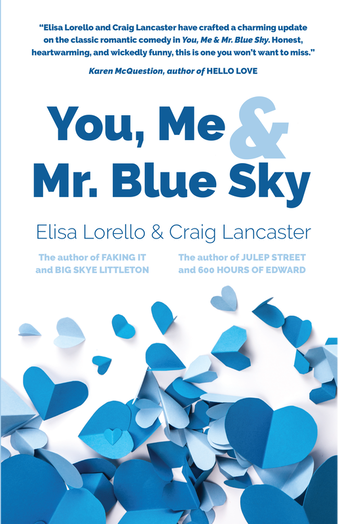 So I'm driving home from Big Sky and I'm talking on the phone—hands-free—with Elisa and I'm saying much of what I said above, only differently, and I'm telling her how energized I am, and I'm hearing how energized she is, and we come around to You, Me & Mr. Blue Sky. It's the novel—a romantic comedy that goes deeper, as Elisa's work does—she and I wrote together in 2018 and 2019. We released it ourselves ... and pretty much let it flop around out there. Our crises of confidence coincided. Those were hard, broken days. We had no energy for much of anything, and certainly not for getting out and trying to introduce a book to the world. We were too adrift in our personal lives to have the fire for the professional. Frankly, there were times I wasn't sure we'd make it. But we did, and we have, and we're going to. Elisa is back, too, and she said, you know what, we should put a new jacket on that old novel we never really got behind. Freshen it up. It's a story of brightness and hope, and it has this dreary cover that doesn't fit it. Let's give it some love. OK, she didn't say that exactly, but that was the gist. And here it is, dressed to meet the readers we hoped it would meet. 4. Health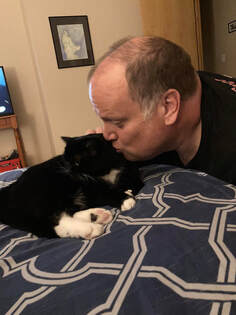 Elisa didn't join me in Big Sky because our cat, Spatz, has been ailing. The most recent health issue was one that had a small sliver of hope for resolution and a rather wide, grim likelihood in terms of what we'd have to do. I had an appointment I had to keep, and Elisa decided to stay behind and tend to our girl.
And our girl, not for the first time, has proved resilient. Her issue has resolved itself—or, at the very least, has recessed into a place where she's her old self again for however long that lasts. She was a surprise when she came into our lives, and we've resolved to enjoy her for as long as we have her. That horizon, delightfully, has widened. We're thrilled. As Elisa is given to saying, she's our Rushmore, Max. 9/5/2022 0 Comments Finding the Wind AgainFrom time to time, on no fixed schedule, I drop a post into Facebook that starts like this: A little [whatever day it is] craft talk, if you'll indulge me ... I then hold forth on whatever's in my head, fixating on various aspects of the writing life (structure, pacing, idea management, etc.). I'm nobody's paragon of craft discipline, that much is certain. With regard to art, I am, for better or worse, a do-it type rather than a talk-about-it type. And because I didn't come from the academy or any kind of writing program—unless you count the immersive education of journalism—I'm not really comfortable with the conversations anyway. They too quickly expose the gaps I've papered over with intuition and practice. But I do have my moments. This morning brought one of them. I talked about how an idea I got charged up about a few weeks ago stalled out on me fewer than 20,000 words in ... and how I resuscitated it. Let's go deeper ... The idea is the thing 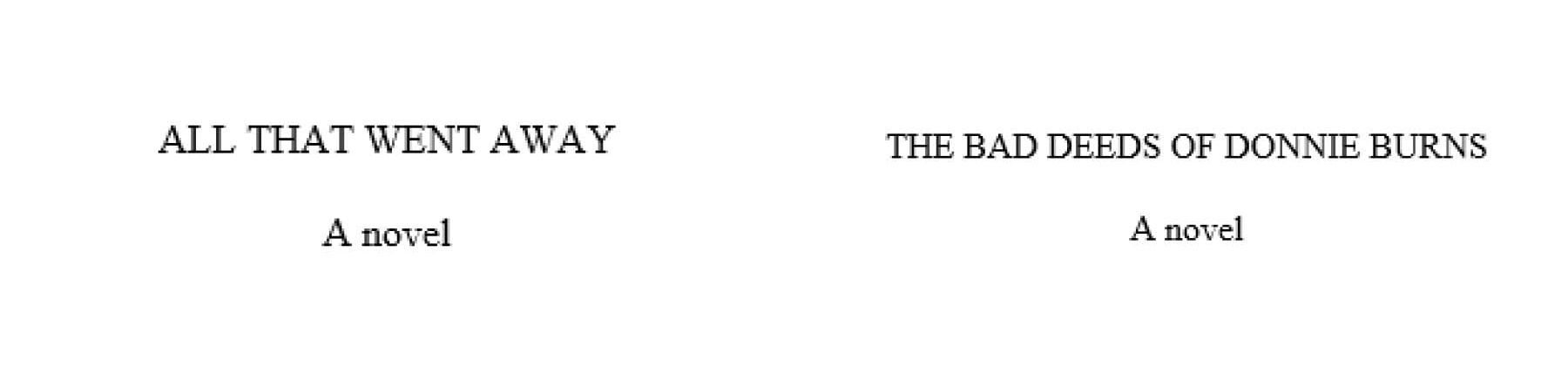 I'm calling this one ALL THAT WENT AWAY or THE BAD DEEDS OF DONNIE BURNS. I haven't decided yet. Here's how it works for me, with the acknowledgment that everything herein has a disclaimer of your mileage may vary:
The idea that recently stalled on me had a fairly quick gestation. I'd say within a couple of weeks of thinking about it a lot, I decided to start writing (having a deadline was no small factor, I'd reckon). The decision to write is the crucial one, because that locks me into a commitment I'm not quick to make (my output over the past 14 years notwithstanding). One of my favorite quotes comes from Stephen King, who likened the writing of a novel to sailing a bathtub across the ocean. The decision to start writing puts me in the bathtub, and between you and me, I'd rather be on the couch. Experience, in my, uh, experience, is a double-edged sword. Writing a novel is much harder now than it was when I wrote the first one. Harder mentally, harder emotionally, harder physically (not that I'm unloading shipping vessels here or anything, but yer boy is older than he used to be, and things like eyes and fingers and butt cheeks aren't as hardy as they once were). All of that difficulty is offset, somewhat, by a greater ability to differentiate between a garden-variety idea and one that has the legs (or sea legs, if we're to stick to the sailing metaphor) to get from here to there. The stall-outs still happen, though. Sometimes I'm able to salvage them into a short story. Sometimes they just sit forevermore, dead husks taking up space on my hard drive. So there's that. When I sit down to work, I do have more confidence now that I'll be able to cross the ocean in my bathtub than I did years earlier on other projects. I don't have a guarantee—because of how I work, which some writers call pantsing, I'm never entirely sure where I'm headed—but I have the experience of seeing these ideas through, which grants me some confidence that I'll reach the other shore. But still: Bathtub. Ocean. And sometimes the wind leaves those sails without much warning. The stalling out I discovered I was adrift at about the 17,000-word mark. On the face of it, that's not a good sign. At that point, you're barely coming out of the early part of a novel-length work into the murky middle, where you have every right to expect that you'll feel lost (particularly if you're a pantser) while you're drafting the thing. I was scared—all that work, jeopardized—but not panicked. I set my work down and I made myself quiet. Over the next couple of weeks, I considered many things:
These thoughts began competing with each other, to the point that a haze formed and settled on my head and blocked my vision. In response to that, I got quieter. I focused harder. I listened more intently to what my inner assessments were trying to tell me. And then the haze lifted. Back in the bathtub Over the past four or five days, I've revisited the manuscript in progress. I've reread every word, from number one to number 17,751. I've recast many of them. And I've come to a few conclusions:
So onward we go. The sails are up. The knots are tightened. I might run the Jolly Roger up the mast, just to be a badass about it. In the meantime, there's a lot of open water ahead, but I have faith that the shore waits for me out there somewhere. 8/14/2022 0 Comments Small. Appreciative.
Life has some funny cycles. As I write this, I'm just a handful of hours home from a couple of days in Great Falls, that visit coming on the heels of another Great Falls trip the previous week. Before that, I think the last time I was in Great Falls other than just passing through was ... 2010? 2011? A long time ago. I hope this means I'll be going back sooner rather than later. I like that town.
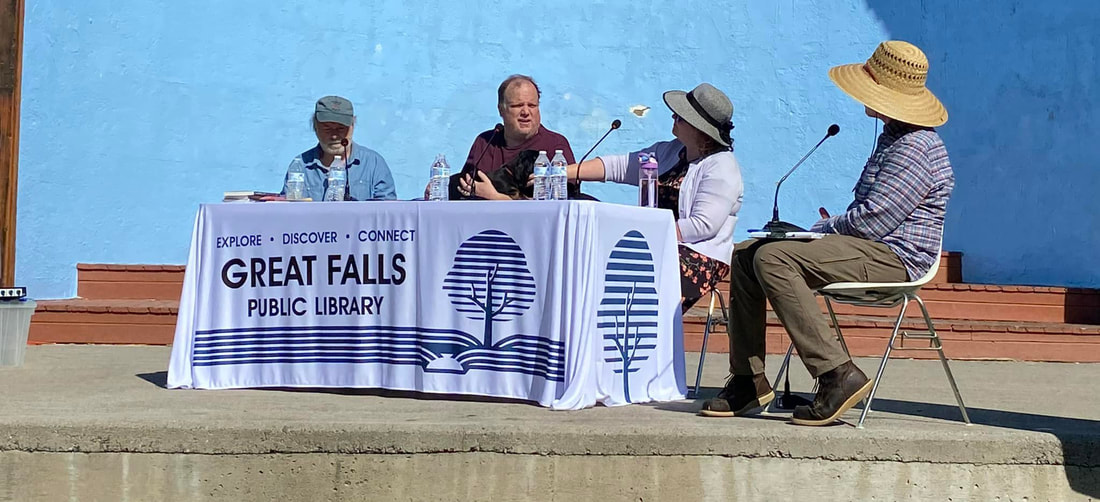
From left, Dave Caserio, me (holding Fretless the Dachshund), Kristen Inbody and Harold Wormington of the Great Falls Public Library. (Photo from Kristen Inbody via Tiffany Aldinger)
I was there to take part in a panel discussion of Montana authors, sponsored by the Great Falls Public Library as part of the Big River Ruckus festival. It was a blistering-hot morning, and my planet-sized melon sizzled. As is often the case for literary events, we didn't have a big crowd (I believe the applicable adjectives are "small" and "appreciative"), but we had good times in abundance. I joined poet Dave Caserio (a Billings denizen, like me) and writer Kristen Inbody, and we had a rollicking good time talking about writing in the West, ideas, how place figures into our writing, and much more.
Whenever I do an event, I'm put in mind of a line from a Pernice Brothers song: It doesn't matter if the crowd is thin / we sing to six the way we sing to ten ...
It's a funny line, of course, but the sentiment is dead-on. I've seen everything there is to see at readings, book signings, and the like: small gatherings, no gatherings, full houses, whatever. Whatever you get, you deliver as best you can to whoever was kind enough to show up. It's a charming business in that way. Every hand that's there to shake—or the only hand that's there to shake—is another chance to make a connection. And connections are everything. One person showed up? Great! Take that person out for dinner or a drink. The whole town showed up? Fantastic! Now you've got a party.
Love is love, and we love the stage ...
Before heading home Sunday, I drove out northwest of Great Falls to see the dairy farm my father grew up on. It was only the third time I've been there, and the second was just a drive-by, but I remembered the route just fine. I drove down the long driveway to where the house is, but nobody came out, and I wasn't about to go knocking on doors, so I took a quick look, then slipped out of there quietly.
Here's a nice shot from atop the bench, about a mile and a half from the farmhouse. Sorry for the telephone pole bisecting Square Butte. 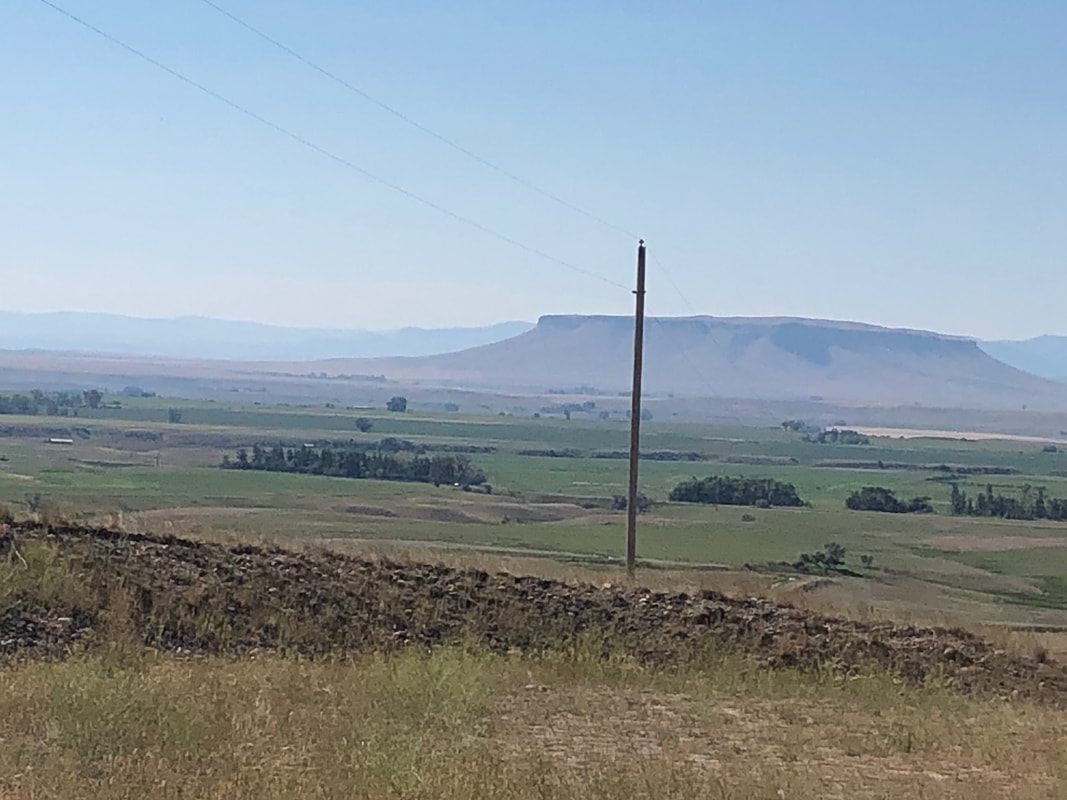
When I talk about writing and where it comes from, as I did during our discussion Saturday, I'm apt to talk about how we are born with stories. We're not blank slates. Going to a place that was formative for my father (in mostly devastating ways, unfortunately) is a good demonstration of what I mean. It allows me to put eyes on his life, to process it, and to make sense of my own. Because of the way his life was shaped by his early experiences, he had a story to transfer to me, one that I would start to carry when I came into the world, along with the one I would live out in my own days. The same is true, of course, with my mother, and her parents, and his parents, and their parents before them, and on and on. The stories are inside us, already coded. We draw them out, interpret them, weave them with imagination and memory (in the case of fiction), give them purpose. It's a beautiful thing. Even when the underlying material is made up of mostly terrible things.
"Before you climb the mountain, first the foothills must appear."
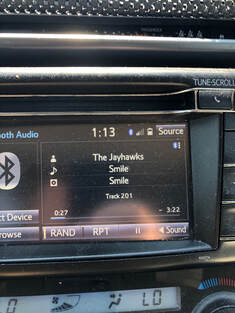
It was a long, hot, empty drive home for Fretless and me. He mostly slept. I mostly sang along with the random shuffle of iTunes, something I can get away with when I'm alone. (I certainly wouldn't subject any human to my singing voice.)
On the final stretch home, I received a particular delight when iTunes served up one of my favorite songs but also one that doesn't often swim to the top of the heap. I suppose most songs remind us of something, someone or some point in time. Certainly, this one does that for me. There's a tinge of melancholy, though, because it's a reminder of a friendship I miss. It's been many years since it went by the wayside, and I've come to embrace something I was told a long time ago when I was seeing a counselor while in the midst of divorce: Some friendships are like cab rides. They have a beginning and an end. Indeed, they do.
Anyway, it was nice to hear the song at that moment, with my head where it was (reeling in other memories), to recall good times with someone who was a good friend, and to put out a silent wish: I hope the good life has found you where you are.
It certainly has found me. Coming home—to Billings, to Elisa, to Spatz the cat—is the best arrival I've ever known. It makes the leaving worthwhile. 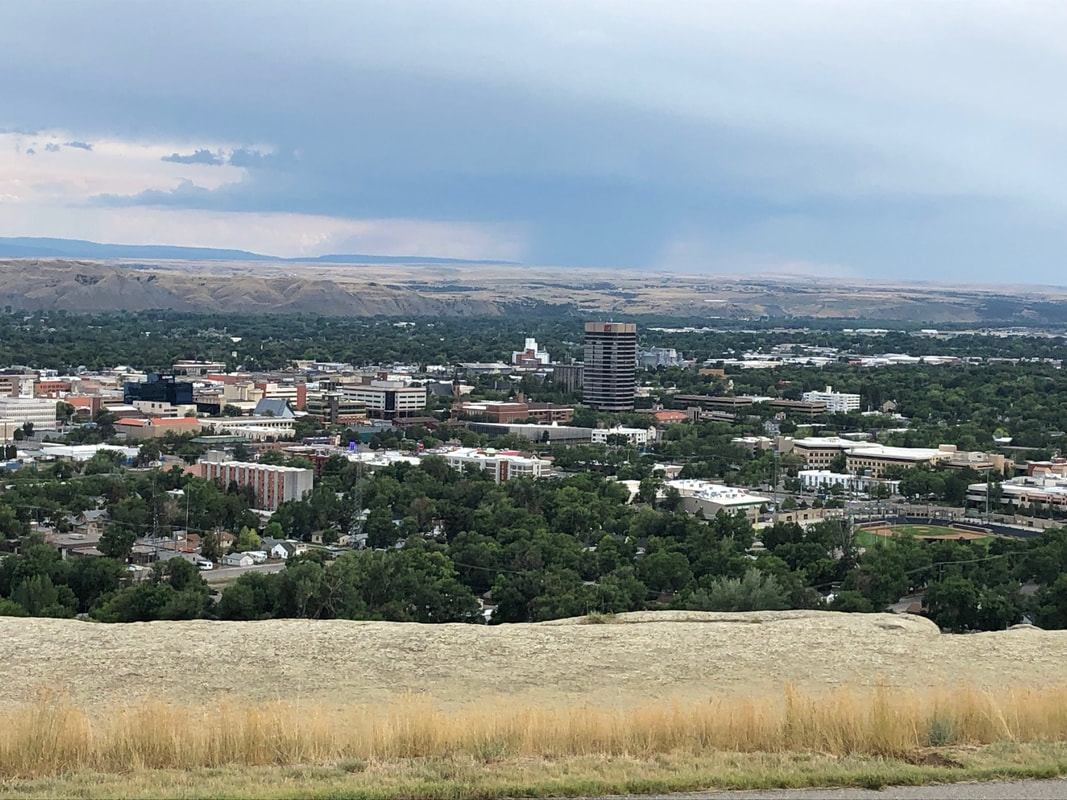
Billings. It's my kind town.
8/5/2022 0 Comments Great Falls, AdequatelyCome October 1st, it will be six years of marriage and about seven and a half years of togetherness for Elisa and me, and let me tell you: That's long enough that most of the stories have been told, mine to her and hers to me. We scooted away for an overnight trip to Great Falls this week. I had an event at Cassiopeia Books and an overdue acquaintance to make with owner Millie Whalen, and it was nice that Elisa and I could get away, just the two of us, for a little while. On the trip home, one of those untold stories spilled out ... 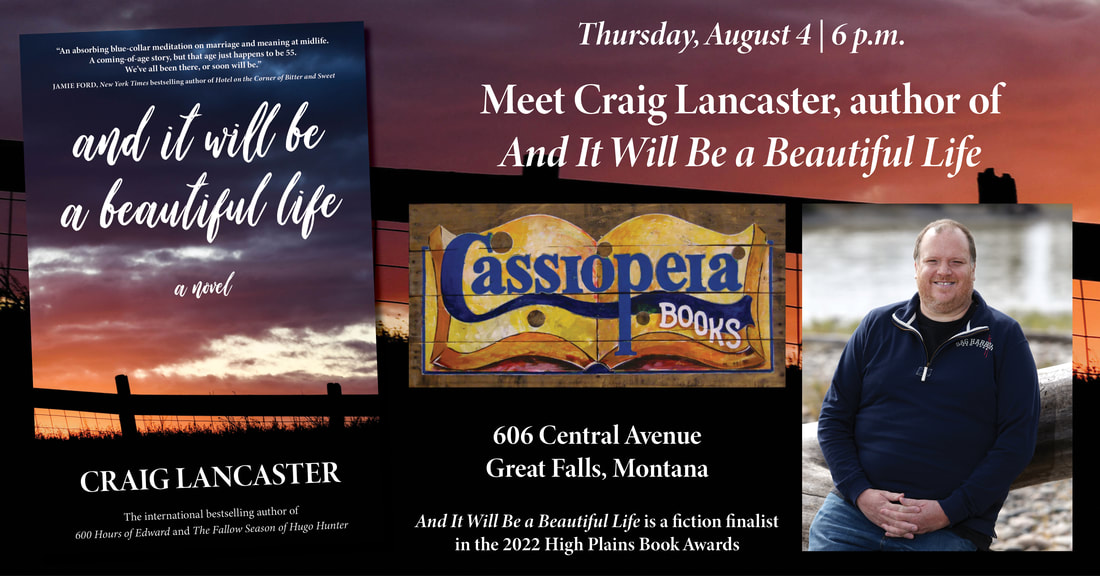 Great Falls is where a lot of my family lore resides—my father, born in Conrad, grew up around there, and he and my mother married there long before I showed up—but it's not somewhere I often go. In nearly sixteen years of living in Montana, I've been only a handful of times, far less often than I've been to Missoula or Bozeman or Livingston or Helena or, heck, Miles City or Glendive. But in 1992, I almost moved there. That's the story that had gone untold. Now, when I say "almost," some qualifiers are in order. I wanted to move to Great Falls (or thought I did). The sports editor at the Great Falls Tribune at the time, a wonderful guy named George Geise, wanted me to move to Great Falls. The man who could make it happen, a senior-level editor at the paper I'd just as soon not name (but whose name I've never forgotten), made it clear I wouldn't be welcome there. The reason: I didn't have a college degree, and he didn't think I was qualified for the job without one. (I still don't have a sheepskin, but that's another story.) Now, let's be clear: This guy was flat-out wrong. I could handle the job I'd applied for (sports copy editor/page designer). I was handling it at a paper of similar size in Texarkana, Texas, and I would go on to handle it at progressively larger, more prestigious papers. I would, in time, become well-decorated and well-traveled. I would lead workshops in editing. I would direct a large sports department at a large West Coast newspaper. I would ... but I hadn't yet. Not in 1992. Then, I was a 22-year-old kid with some talent and, in fairness to the Executive Who Shall Not Be Named, some cockiness that was a bit out of proportion to the skills I'd honed to that point. And that imbalance, I think, would have been a perfectly valid reason for him to say, "Sorry, kid, not going to happen here." But that's not what he said. He fixated on the degree I didn't have. I didn't get the job. George Geise was disappointed. So was I. There was personal history to unearth in Great Falls, and I was already well in love with Montana, an affair that goes on and on. I thought I was missing out on something important. So, stuck for a while longer at a job in Texarkana I no longer wanted*, I made a resolution, one that has stuck for 30 years: No way was a guy like that going to be right about me. I made sure of it. *—In Texarkana, the single most appalling moment of my journalism career, now more than three decades old, happened. When Magic Johnson rejoined the NBA after his HIV-positive diagnosis, I played the story big on the front page of the sports section (as did just about every paper in America). The next day, a copy of the page was in my mailbox, the story circled in red pen, along with a note from an executive at the paper: "Magic Johnson is an immoral HIV carrier, and none of our readers care about him." I should have quit on the spot. It's to my eternal chagrin that I did not. I did, however, start looking for a new job immediately. 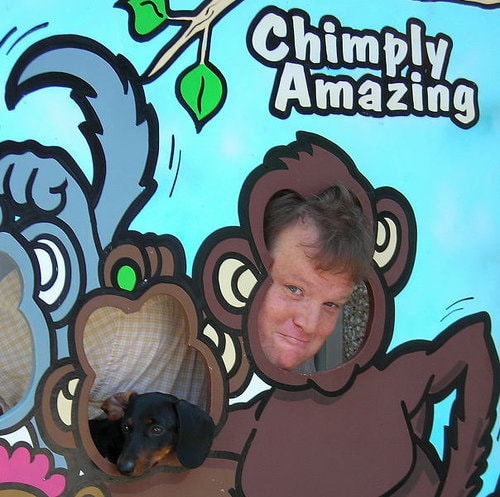 Me with Zula (RIP), clowning around in Great Falls in 2007. Me with Zula (RIP), clowning around in Great Falls in 2007. Now ... Did I miss out on something by not finding my way to Great Falls in 1992? Well, yes. Something. But not everything, and not the most important things. I didn't make it to Montana and stick here until 2006, when I was 36. Within a couple of years, I was writing books, something I'd have not even attempted 14 years earlier. By the time I got here, I'd already dug into the personal history that was faintly compelling me in my early 20s. I'd found my grandfather and closed an open question. I'd begun to talk to my dad about his life and his memories, so I could find ways to get closer to him. In subsequent years, I'd help, in whatever meager way I could, to put ghosts to rest. The headstone pictured below on my grandmother's grave (in Great Falls) went in just 15-plus years ago, well after her death, as my father began to forgive her for the ways she'd wronged him, a thawing of feelings that came about because he and I started digging in the hard soil of his past. 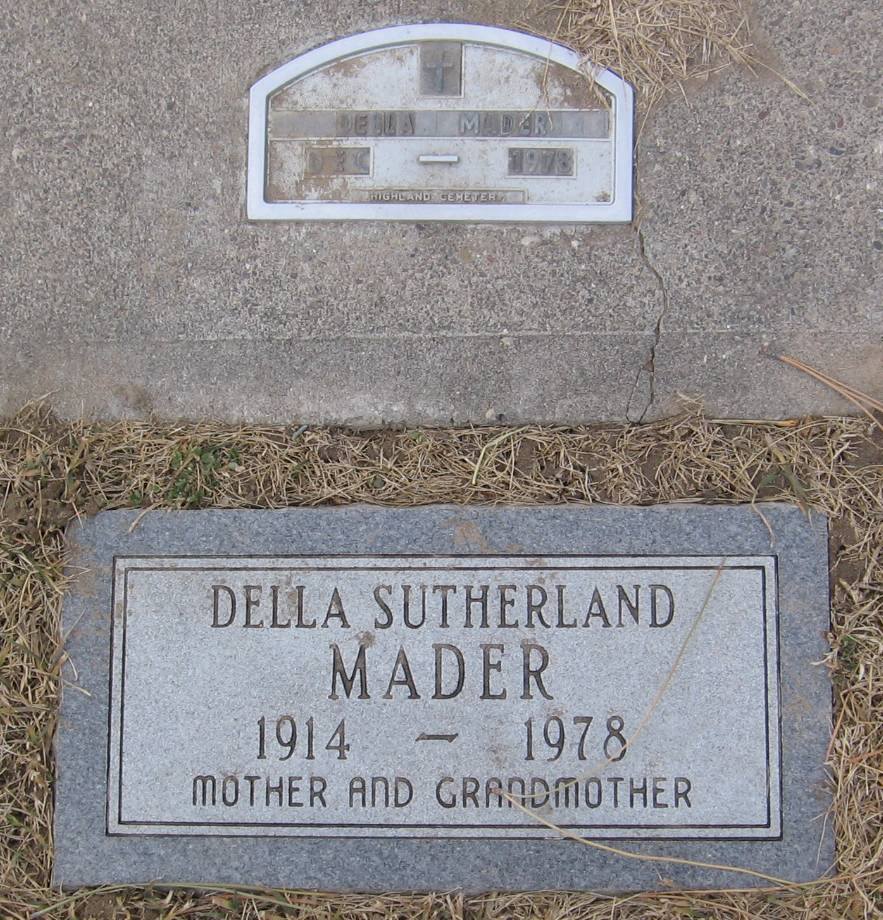 On some level, I'm just guessing, but I doubt any of that would have happened the way it did if I'd shown up in Great Falls at the callow age of 22 and burned through that job the way I burned through others during that time in my life. Montana might have been over and done with before I could have gotten to know her. I might have missed the best years I've enjoyed here. The very best years of my life, as it turns out.
So far, anyway. 7/17/2022 0 Comments On the Struggle I just—and when I say just, I mean less than an hour ago—finished constructing and printing out the interior print file for Elisa's forthcoming novel, All of You. I'm proud for so many reasons: that she's written another banger, that she's making tangible progress toward getting it out there, that I am able to use a skill I've developed to help her. Elisa believes in this novel, and she's reached a juncture in her career where putting it out herself and realizing her own vision for it is of paramount importance to her. And that gets at why I'm most proud: A year ago, she wasn't sure she'd ever be here again. Three years ago, I wasn't sure I would be. Much of the joy of writing and publishing and connecting had been sucked out of it, for both of us, for similar and divergent reasons. And, listen, if you can't find the joy, there's not much reason to keep going. The difficulties are too numerous, the frustrations too pitched, the dead ends too abrupt in the best of circumstances. Joy, and its cousins purpose and determination, helps carry you through all of that. I won't speak to how Elisa lost joy and found it again; that's her story to tell in her way. But I can speak to my own journey ... 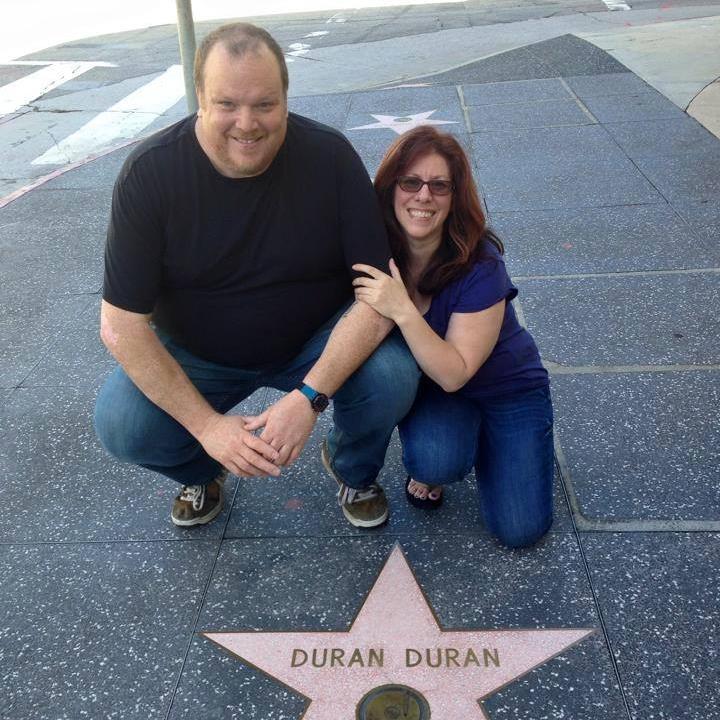 Visiting the Duran Duran star on the Hollywood Walk of Fame in 2015, hours before we saw them that night at the Hollywood Bowl. Those were the days. Facebook is a scourge, mostly. But it's also a scourge with features that aren't easily replaceable through other means. I can't call up my nieces and nephews on the daily and ask what's going on their lives—I mean, I could, but they'd quickly tire of it, and I'm just not constituted to operate that way—but I can see every important turn on Facebook. I can be conversant about what they're doing. I can feel connected to them. Similarly, there's nothing quite like Facebook's Memories feature to remind you of the way things once were. Sometimes, it brings into sharp relief just how different your current circumstances are. Elisa and I get this a lot, especially this time of year, which synchs up with the first summer of our courtship—The Magical Summer of 2015, as we like to call it. And so we sit at the breakfast table, older, paunchier, scuffling harder to pay bills, not knowing when or where our next vacation will be, and we sigh contentedly at the memories of a time when royalties were flush, there were no jobs to go to, and we could just disappear without worrying where the next check was coming from. And we say "gee, wouldn't it be nice to experience that again?" and we agree that it would be, but we're not really thinking about how much richer life has become in other ways, lost as we are in the haze of memory. We're not thinking about the house we bought together, the pets we love, the history we're building. We're thinking about being financially carefree and unbound by anything other than our imaginations. They're pretty sweet, those memories ...  If you've read the past several paragraphs and thought, OK, great, Craig, but that was a bunch of sentimental claptrap about life and leisure and I'm here for the struggle with art, let me say this: I find it impossible to separate the two. Those memories from 2015 beguile us, in part, because of what fell out from there: Love and marriage and commitment, yes, but also struggle. We both wrote and published books we loved and believed in, same as we had before, only those subsequent books weren't commercially successful in the same way their predecessors had been. We fought against ourselves to recapture what we thought we'd lost, not really having any idea what it was or why it had seemingly gone sour. We got dumped by our publisher, and while it would be nice to be above it, to greet such news with an attitude of "their loss," the simple fact is that the losses felt very much like ours. It felt like rejection, because it was rejection. It hurt because we are humans, and we bleed when we're cut.
However ... It's important to know that, even as you build yourself up as special, you're not. Rejection isn't your burden alone; everybody grapples with it. A change in trajectory isn't singular failure that's on you; that's life and what happens sometimes when you have the audacity to live it. It took a while to come out of that depressive trough. It took a while to find a new footing. It took a while to want to get in there and slug it out again. For me, the breakthrough came when I realized that my happiest place was inside the work, where it was just me and the stories I'm trying to tell, where the measure of progress is keeping faith with what I'm attempting to do by showing up, every day, and doing a little bit more to realize it. When I rediscovered that, the rest began falling in. The publishing partner with whom I want to bring these stories out, who believes in the work the same way I do. The reconnection with a sense of fulfillment (not necessarily happiness, which is more transient and thus, honestly, less valuable to me). Exterior validations of the work. But always, always, it's the work. I see that in Elisa now, the spark she has rediscovered with this new book. She's fully into her own joyousness, and you can take it from someone who's seen this from her before and worried when it went away for a while: Look out. She's got this. This is a story of a bookstore. It's a story of a bookstore that was baked from scratch, with not a lot of ingredients, by a lot of people who'd never baked a bookstore before, trying a method that, if not unprecedented, certainly is uncommon. The bookstore is This House of Books, in the town where I live, Billings, Montana. Its name is a nod to perhaps the most famous work of perhaps the most famous Montana author, Ivan Doig. What we call it is one of my favorite things about it, but not my very favorite. No, my very favorite thing about it lies within the many people who love it and sustain it, and then that smaller set of stalwarts who ensure that it keeps going, who dig deep into their own pockets to give it an occasional transfusion, who pour their sweat equity into its needs, which are both predictable and unpredictable. Who are there for the biggest moments in its life. Like when it moves, as it did this holiday weekend, going from one lovely downtown space to another. Elisa and I offered some modest help with the move, just a few hours and just a few dolly loads. We're part of the larger support system, the people who shop there, who invested early in its co-op model, who take advantage of its generous policy of holding events for local authors. Today, for example, I dropped in for an hour and helped stock shelves (including my own, below). A small contribution. The stalwarts, they'll be there into the deeper hours, as they have been all weekend. Bless them. We would not have this community pillar if not for them. 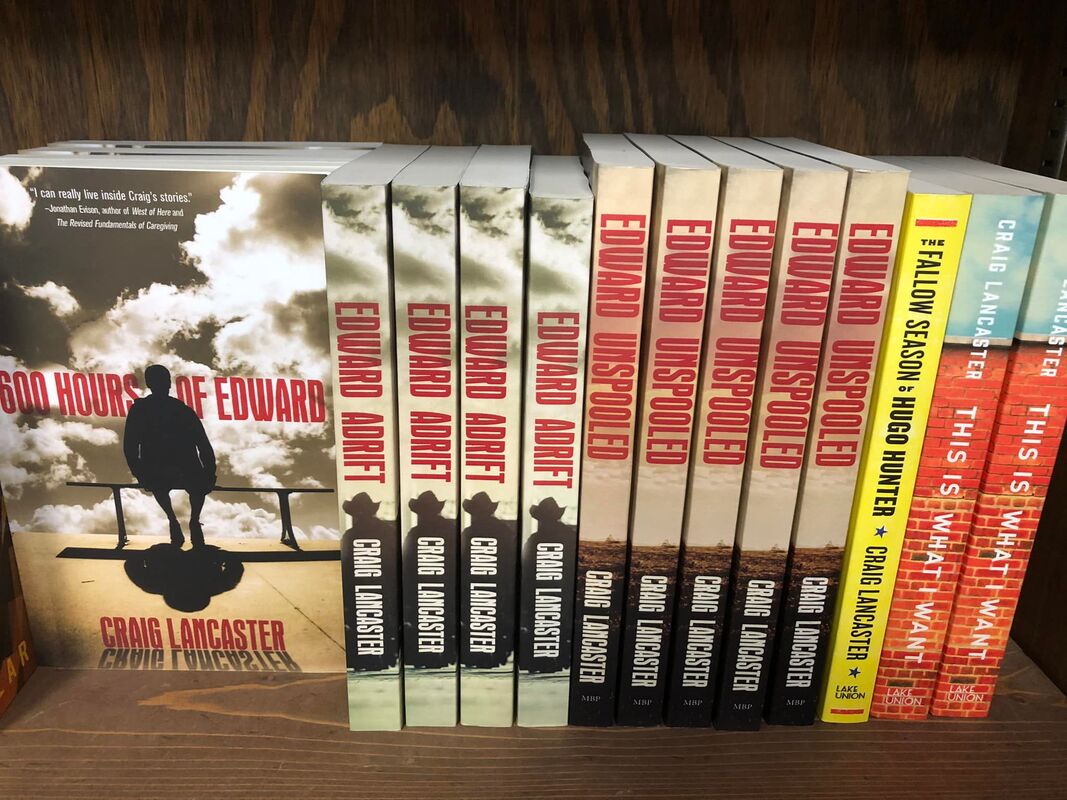 And it is a pillar, a status the bookstore has achieved against what Alex Chilton, in another context, called "unbelievable odds." It's the brainchild of author Carrie La Seur, whose admirable tenacity ensured that we didn't just talk about having a bookstore in Billings but also got it done. Its funding model was suggested by former Billings mayor Chuck Tooley. It wobbled into a standing position on underfunded legs, but it found a way to walk, and it's walking still. That's thanks to talented and selfless folks who volunteer their time and energy. And, of course, it's thanks to the people who shop there.
The continued existence of This House of Books feels personal to me, and not because of the money Elisa and I have sunk into it (not all that much, relatively speaking) or the labor we've done (ditto). No, it feels personal because the bookstore exemplifies the promise and the attraction of where we live. It feels like a stand for the homegrown, the funky, the only-in-Billings, the same as the non-chain restaurants and the little shops and the independent coffee bars here. It feels like something the billionaires and the hedge funds can't get their claws into, if we don't let them, if we consider where we buy and why and act on those values. Downtown Billings was a moribund place for many years, and it's not anymore. I'd like to think our little bookstore has something to do with that. If you've got one—an independent bookstore—cherish it. If you've always dreamed of owning one, feel free to claim a piece of mine. Ours. |
About CraigCraig Lancaster is an author, an editor, a publication designer, a layabout, a largely frustrated Dallas Mavericks fan, an eater of breakfast, a dreamer of dreams, a husband, a brother, a son, an uncle. And most of all, a man who values a T-shirt. Archives
April 2024
By categoryAll 600 Hours Of Edward And It Will Be A Beautiful Life Awards Books Bookstores Community Connection Craft Craig Reads The Classics Dreaming Northward Education Edward Adrift Family Geography History Libraries Memory Montana NaNoWriMo Northward Dreams People Plays Poetry Public Policy Q&A Social Media Sports Stage Texas The Fallow Season Of Hugo Hunter The Summer Son This Is What I Want Time Travel Work Writers Writing Archives
April 2024
|

 RSS Feed